

Nieves Calvo
Founder of the Intangible Land, animal lover and endless traveler. She's also a designer.
Joe P. and Nieves caught up recently to talk design. The two designers worked together in big time NYC a few years ago at ICRAVE. The conversation below has been edited for textual clarity.
On taste, trends, and aesthetic conviction
Which "timeless" design idea do you think will look embarrassing in ten years?
I believe the hyper-monochromatic, all-beige aesthetic, often replicated without any personal context, will age poorly. While a neutral palette is currently marketed as 'timeless,' the copy-paste application of these tones has led to a homogenization of residential interiors. We have oversaturated the market with these safe environments to the point where they have lost their enduring appeal. Neutrals are an excellent foundation, but when applied ubiquitously without considering the client's unique lifestyle, personal narrative, or the architectural context of the space, they result in interiors that lack soul and authenticity.
Name a style or era that is critically dismissed but you secretly love. Why is the criticism wrong?
Eclecticism is, without a doubt, my favorite style ever. I also feel it's the one that makes the most sense regarding the essence of a concept or a personality. Nowadays, we try too hard to generate a concept that makes sense both aesthetically and narratively; everything has to be the exact same style, and sometimes I feel it’s just too much. There is no freedom. I also love how, in the past, people would buy a statement piece with a daring design, intending for it to last no matter what. You would buy a colorful, curved green sofa and make it work for years. There is something beautiful about that. We’ve lost that mindset, and that loss is very defining of our time.
When does "personality" in a room cross the line into "trying too hard"?
When the design interferes with your everyday life, family dynamics, or the way you actually want to live. We shouldn't design without knowing how we really want to live, what pieces, corners, spaces, or movement flow make us feel truly comfortable in our own home. We shouldn't focus on trends or on having the 'perfect' home just for guests. For example, in Spain, it used to be very typical to have a living room that was only used when visitors came over; it was never used in daily life. This was a terrible waste of space and opportunity. So yes, designing a space you can't actually use is definitely trying too hard.
On clients, money, and the things that go unsaid
What's the most absurd request you've ever received, and did you do it?
In my experience, the most absurd requests are never related to design, but rather to time or deliverable expectations. Design requires a certain amount of time, a careful acknowledgment of the surroundings, and many other aspects that are sometimes completely disregarded.
What do you wish more clients understood about how designers actually make money?
In certain designs you are mostly paying for intellectual property, project management, and problem-solving skills, not just the final aesthetic outcome. If you aren't in the industry, it's easy to assume you are simply paying for 'good taste.' However, behind every beautiful room is a massive iceberg of invisible labor: spatial calculations, structural coordination, and crisis management. People often don't value this simply because they don't see it. At the same time, I admit that we, as an industry, need to take accountability and do a much better job of transparently communicating the true scope of our work, so clients understand exactly what our fee structures are actually covering.
On craft and conviction
Is there a material or finish you simply will not specify, no matter what the client offers to pay?
For me, the client generally has the final say. That being said, our role as experts is to advise on the best options and propose alternatives, whether the issue involves budget, durability, aesthetics, or managing expectations. As designers, transparency is key to guiding the client toward the option we feel works best for them. The only hard line I draw is when a material compromises safety, building codes, or basic environmental ethics; in those cases, I will not specify it. Otherwise, if a fully informed client still strongly wants to move forward with their initial choice, we should do our best to accommodate and integrate that design.
What do you think a room "should feel like" before you think about what it should look like?
There is always a desired feeling or emotional need for each room or space, and how we want that room to feel is deeply personal. How are we planning to use the living room? Is it a space to share with friends? Or a place to read novels and chill? Or both? How do we want it to feel? We should always design to answer that exact question.
Walk me through a design decision you made that you knew was unpopular but were proud of.
A design decision I am always proud of, even when it is unpopular at first, is insisting on noble, natural materials and truly betting on long-term durability. Today, everyone wants 'perfect' synthetic materials, like vinyl flooring or porcelain that mimics stone (that are also great sometimes!) because they are cheaper and require zero maintenance. Pushing for natural wood that will scratch, or real stone that might stain, is often an unpopular, tough sell. People are afraid of wear and tear. However, I always push for authenticity. They age with the home, gaining character and telling a story.
Tell me about a project that taught you something painful.
The most painful lesson I've learned revolves around limits. I learned that without boundaries, the scope of work can easily blur. It taught me that a contract, for instance, isn't just a financial agreement; it's an essential tool for defining the exact scope of work and protecting our time. Setting clear limits from day one is the only way to build a healthy and respectful dynamic with a client and align on expectations.
Questions that surprise people
What does your own home look like, and is it what your clients would expect?
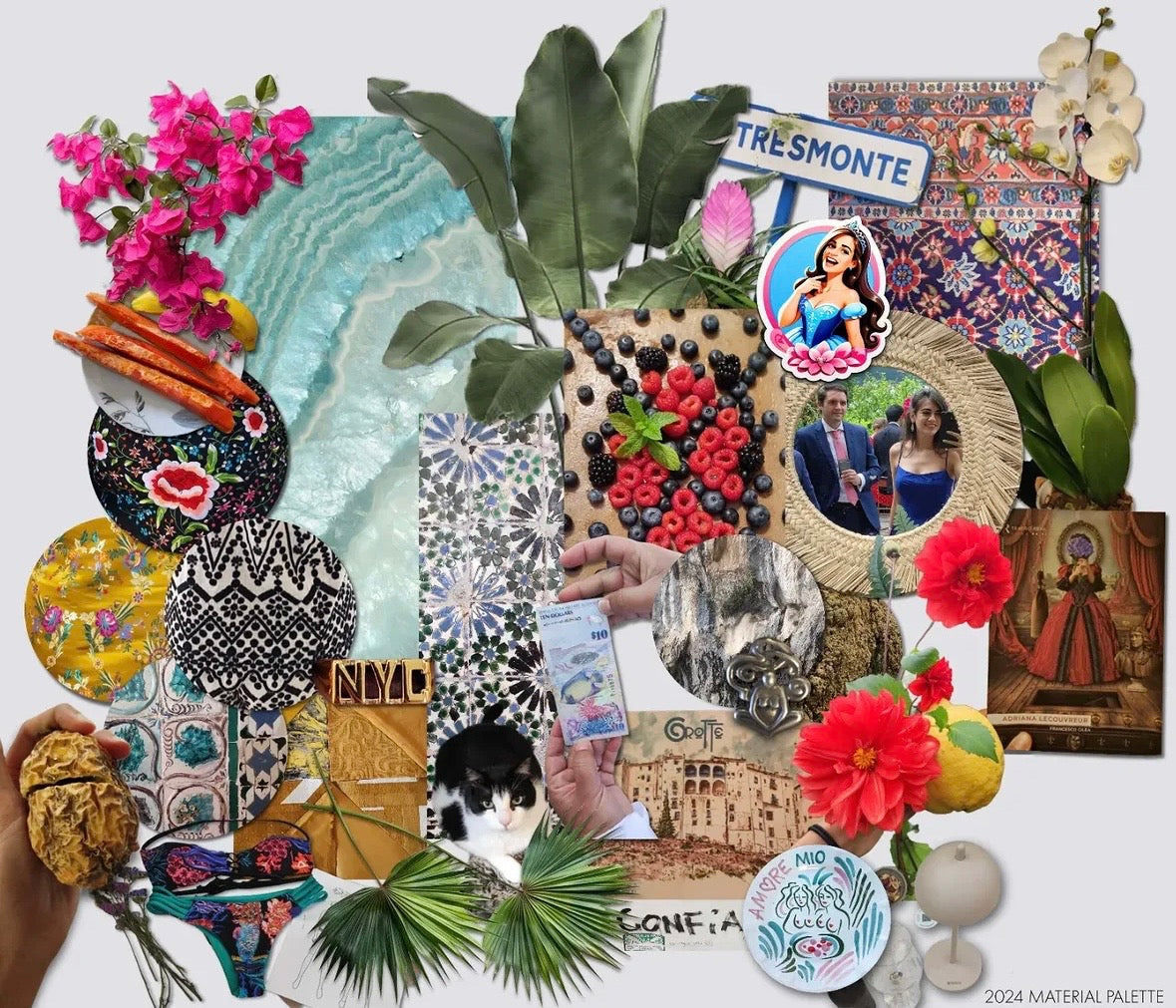
When we moved into our apartment, I deliberately chose not to rush the design process. I firmly believe that curating a home is an ongoing journey, not a race. While I had a clear vision for certain foundational pieces, I am perfectly comfortable living with placeholders until we discover the exact right item. The space is highly eclectic. It's filled with travel finds that carry a narrative, bespoke pieces I designed myself, and curated vintage and second-hand elements. I have never shied away from boldly mixing styles, colors, and patterns. Ultimately, our home is a deeply personal, layered reflection of our shared lifestyle.
What design book do you actually recommend, versus the ones you list because everyone else does?
Rather than a standard design book, On Modern Art by Paul Klee is one of my favorite art-related books ever. I would also strongly recommend reading narrative fiction and fantasy novels. We need to expand our horizons and allow our minds to escape to other worlds, so we can come back stronger and with fresh ideas to implement into our design work.

On the industry itself
E-design, AI room renderings, and shoppable rooms have exploded. Threat or opportunity, and be honest?
Opportunity. Every approach to design from people outside of the design world is a huge opportunity for designers. The appreciation of design comes with experience most of the time, and if that experience needs to stem from curiosity about shoppable rooms or AI renderings, I think it is fantastic. Design is everywhere, and it offers endless approaches and opportunities.
Where do you think the industry will look completely different in five years, and what should designers be doing now?
I think the speed and the way in which neuroscience and technology are changing our world will have a huge impact on the industry. The future of interior design will leave behind classic mood boards and 2D presentations, giving way to spatial computing and AI. Clients will use mixed-reality headsets to walk through hyper-realistic, 1:1 scale simulations of their spaces, for instance, allowing them to modify colors, change furniture, or see how natural lighting shifts in real-time. AI will also act as an indispensable co-pilot, automating highly technical tasks such as space planning, code compliance checks, and the rapid generation of viable floor plans from basic ideas, making the mastery of these technologies vital for designers.
On the other hand, design will become deeply scientific thanks to neuroaesthetics, which studies how physical environments affect our brain and nervous system. Smart homes will go far beyond simply turning on lights with voice commands; they will integrate biometric sensors capable of reading the heart rate or stress levels of the occupants, for example. Using this data, the space will automatically adjust lighting, acoustics, and temperature to optimize mental health, focus, and overall well-being, seamlessly blending technology with human psychology and biology.
There are endless ways the design industry will change in the future, and all of them are very exciting and astonishing.
What's a non-design influence, like a movie, a city, a meal, or a person that has shaped your work more than anything in the design canon?
I don't think there is one specific influence, but rather a mix of influences that are impossible to differentiate. One of the most beautiful things in design is knowing that there is never just a single idea, person, or artist behind anything. It is always a collection of energies that directly or indirectly influence a design. Furthermore, it takes a collection of strengths and expertise to allow us to deliver our part of the design scope, and I think that collaborative reality is just amazing.
☻

pit stop at
The Drive-thru
Check out Nieves' handpicked selections of accessories and finishing touches.
Perfecto!
↑ Designer Chat ↑
↓ Blog ↓
have a read
Tips & Talk
Sometimes people just collect beautiful things, no questions asked. Don't you want to know where they came from? Every object has a history. What happened to make this worn edge? Who made this hand...
Read more
When did every empty corner become something to fix? For years, we've treated space as something to fill. Fill it with another chair, shelf, or object. It starts to feel like a cram session. Here's...
Read more
The 9 Most Common Complaints About Residential General Contractors
Hiring a general contractor is one of the largest purchases most homeowners will ever make, and it is also causes worry. Year after year, home improvement and construction rank near the very top of...
Read more"Define Your Lifestyle"
pior home